|
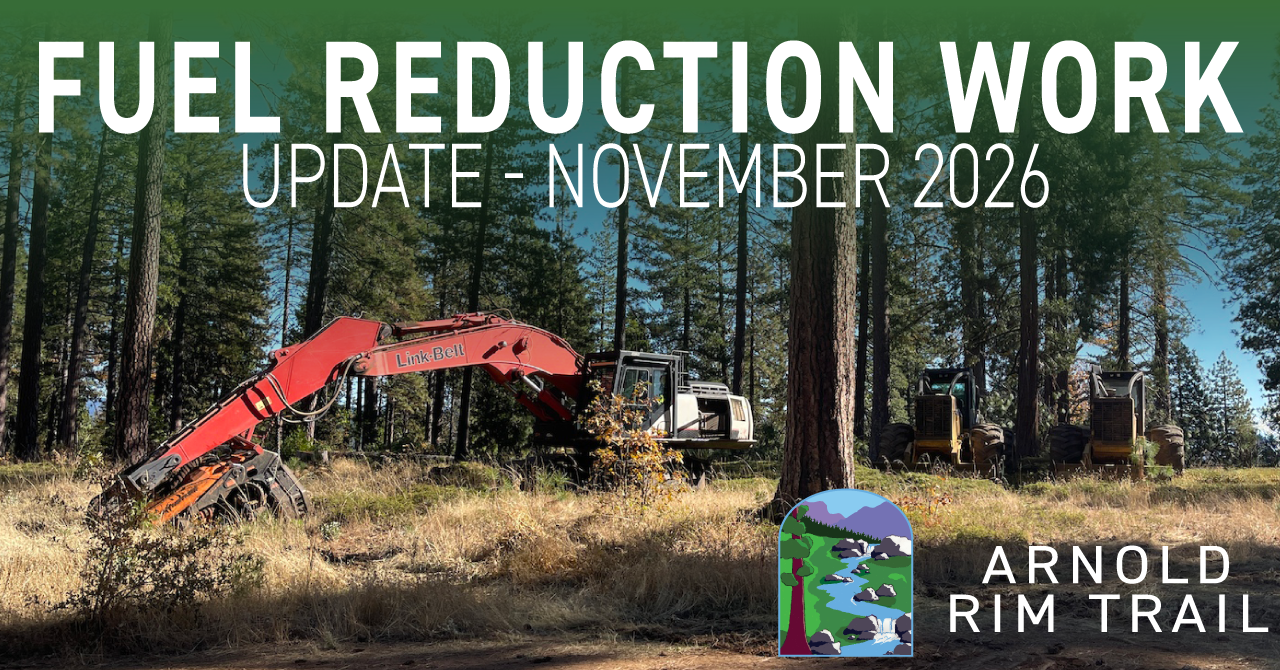
Here’s an update on the fuel reduction work along the Arnold Rim Trail. Two separate projects on Stanislaus National Forest land are now running at the same time, and both affect trails you use.
|
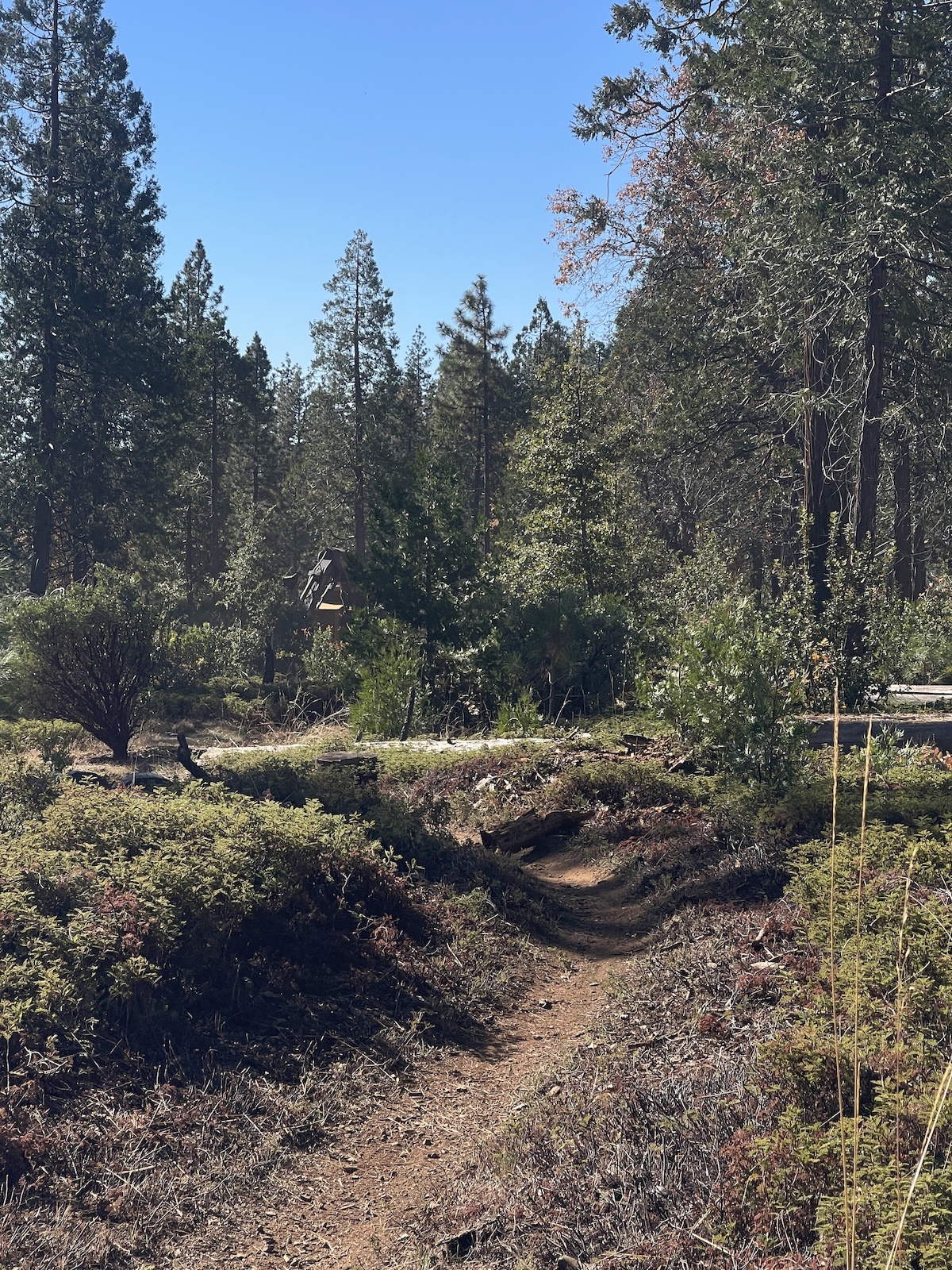
New work: Valley View Drive and Avery-Sheep Ranch Road (Wilma’s Wiggles)
As of November 11, thinning and mastication are underway along Valley View Drive and Avery-Sheep Ranch Road. This work is part of the Forest Service’s Mokelumne–Amador–Calaveras (MAC) Forest Health Project, which widens the existing fuel break along these roads from 300 feet to 500 feet. Larger trees are cut and stacked in piles beside the road, then trucked to the mill. After that, the remaining small trees and brush are masticated (shredded in place).
ARTA has marked all of Wilma’s Wiggles as closed on Trailforks.
Please stay off of Wilma’s Wiggles until further notice. If you drive Valley View or Avery-Sheep Ranch, expect equipment, log piles and trucks on the road.
Continuing work: San Domingo Headwaters. The Calaveras County thinning project in San Domingo Canyon that we told you about in September is still active. ART–San Domingo Headwaters remains closed between posts #68 and #71. The “Do Not Enter” zone near the Hillcrest neighborhood of Hathaway Pines between posts #77 and #80 that we reported in September is now open to the public.
Stay safe around the work:
- Stay at least 300 feet from any operating machinery. Masticators can throw shredded wood and rock as far as 150 feet, and operators in enclosed cabs often can’t see or hear you.
- Obey all posted signs and flagging, and turn back if you come across active work.
- Never pass close behind a machine, even one that looks idle.
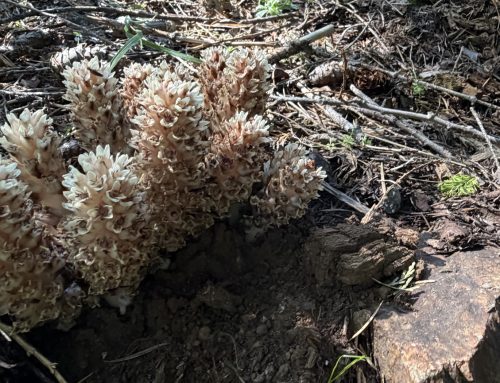
- Leave the orange “noxious weed” ribbon in place. Botanical surveyors put it there to mark plants the crews need to protect or avoid.
The Forest Service has not issued a closure order for the area. The trail closures shown on Trailforks are ARTA’s safety advisories, based on what our docents see in the field. Conditions change from day to day as crews move.
ARTA doesn’t control this work. We’re passing along what we know as a service to trail users. The contracts require contractors to leave trails in the same or better condition than they found them. Treated ground will look raw for a while, then green up within a season or two, and the result is a more open, fire-resistant corridor around the trail. If you see damage to a trail after crews have left an area, or a work zone without warning signs, please send a photo and location to info@arnoldrimtrail.org.
Do you love high quality hiking, biking and riding trails?
Show your support by making a donation!
The Arnold Rim Trail Association is an all-volunteer association without paid staff. Donations are utilized for training team members, providing trail enhancements, and improvement projects throughout the ART System.
Show your support by making a donation!
The Arnold Rim Trail Association is an all-volunteer association without paid staff. Donations are utilized for training team members, providing trail enhancements, and improvement projects throughout the ART System.
The Arnold Rim Trail Association – in partnership with the US Forest Service